
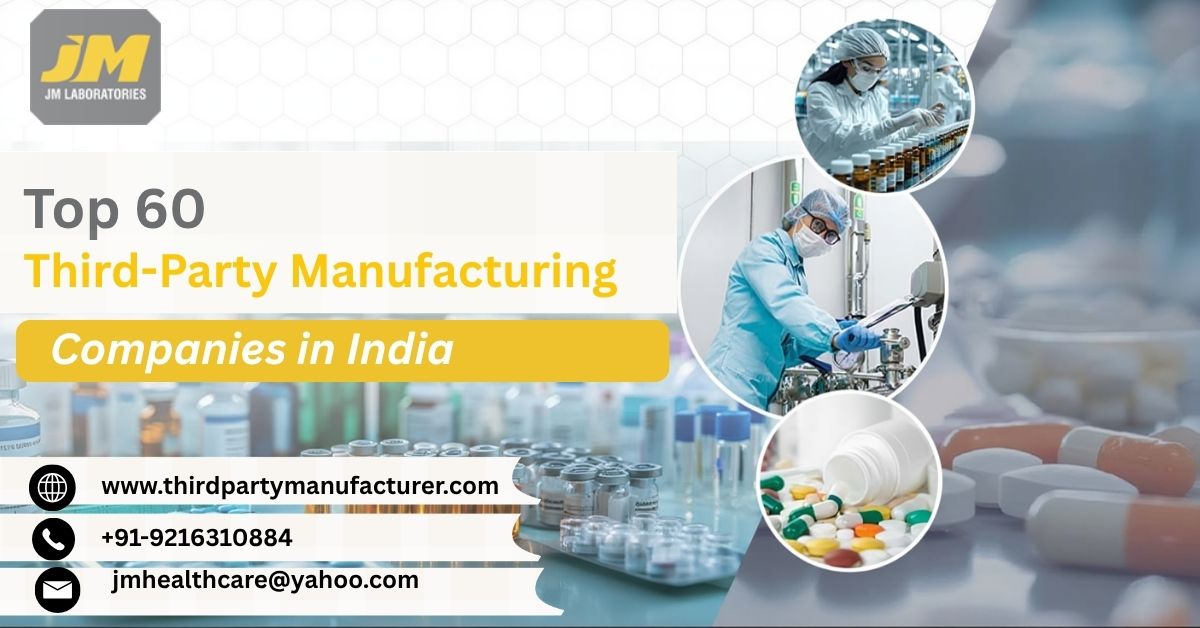
What Is Third-Party Manufacturing in India?
It’s when a brand hires a licensed manufacturer to make its products — under the brand’s own label — without building a plant of its own. The manufacturer handles formulation, production, testing, and packaging; the brand handles marketing and sales. In India, this model dominates pharma, Ayurvedic, nutraceutical, and cosmetic launches because it cuts capital cost and gets products to market in weeks, not years.
What Is Third-Party Manufacturing?
Third-party manufacturing is simple in concept: a brand hires a licensed manufacturer to make its products, under its own label, without building a single plant. The manufacturer handles formulation (or uses one it already has approved), production, testing, packaging, and compliance. The brand focuses on what it’s actually good at — marketing, sales, and getting the product in front of customers.
It’s become the default route into pharma, Ayurveda, nutraceuticals, and cosmetics for a reason. A WHO-GMP facility costs crores to build and years to get compliant. Third-party manufacturing skips that entirely — you’re renting proven capacity instead of building your own.
Why India specifically, in 2026? A few hard numbers explain it. India is the world’s third-largest pharmaceutical producer by volume and supplies close to 20% of global generic medicines. It has more USFDA-approved plants than any country outside the US, plus deep WHO-GMP and EU-GMP coverage. Labor and API supply chains keep costs well below Western markets, and government pushes — Make in India, PLI schemes, the revised Schedule M rules — have only tightened quality standards further, which paradoxically makes the outsourcing model more attractive, not less.
For startups and PCD franchise operators, this means low minimum order quantities and packaging flexibility — you can launch fast without over-committing capital. Established brands use the same model differently: overflow capacity, new therapeutic lines, or region-specific variants, without ever touching their own plant footprint.
Third-Party Manufacturing vs. Contract Manufacturing vs. CDMO
These three terms get used interchangeably, and that’s a mistake worth avoiding before you sign anything.
Third-party manufacturing usually means the formulation and dossier already exist — the manufacturer just produces and packs under your brand. Contract manufacturing can involve transferring your proprietary process to their plant. A full CDMO engagement goes further still: formulation development, analytical work, stability studies, bioequivalence support, dossier prep — the whole R&D-to-commercial pipeline.
Knowing which one you actually need saves you from either overpaying for services you don’t require, or underestimating what a launch will take.
What you gain: no capital tied up in plant and machinery, real savings on infrastructure and compliance overhead, access to formulations and approvals that already exist, and a timeline measured in weeks rather than years. Most third-party manufacturers can also produce across formats — tablets, capsules, syrups, injectables, softgels, topicals — so you’re not locked into one product type.
What you’re trading for that: less direct control over quality, dependence on someone else’s capacity and regulatory standing, and IP exposure if contracts aren’t tight. None of this is a reason to avoid the model — it’s the reason audits and clear contracts matter more than most brands initially assume.
The partnerships that work long-term share one trait: the manufacturer holds current WHO-GMP (or higher) certification for the exact dosage forms involved, and the brand stays engaged — not hands-off — with periodic site reviews.
India’s Pharma Manufacturing Landscape in 2026
The domestic pharma market sits around US$60 billion in FY26 and is on track to more than double, to roughly US$120–130 billion by 2030. Chronic therapies — cardiac, anti-diabetic, CNS — are driving a lot of that growth, alongside wider healthcare access and premiumisation. Exports stay above US$30 billion annually, and India remains a major supplier of vaccines to UNICEF and other global agencies.
The CDMO and third-party segment specifically is outpacing the broader market. China+1 diversification is a big part of why — global brands are actively looking for alternatives to Chinese manufacturing, and India’s cost advantage plus expanding regulatory approvals make it the natural landing spot. Akums, India’s largest pure-play CDMO, now reports multi-billion-unit annual capacity and serves over 1,500 clients — a scale that would’ve been unthinkable a decade ago.
A few trends worth watching heading into the back half of the decade:
- Nutraceuticals and dietary supplements are expanding fast, riding the preventive-healthcare wave.
- Classical and proprietary Ayurvedic products keep growing, backed by AYUSH ministry support.
- Complex generics, injectables, softgels, and specialised delivery systems are seeing rising demand.
- A handful of facilities are already moving into peptides and biosimilars.
- Quality systems are going digital, with data integrity now a genuine differentiator, not just a checkbox.
Geographically, the action concentrates in a few belts: Baddi–Solan (Himachal Pradesh), Haridwar (Uttarakhand), Ahmedabad–Vadodara (Gujarat), Hyderabad, and the Chandigarh–Panchkula corridor. If you’re scouting manufacturers, these clusters are where most of the serious capacity lives.
Top 60 Third-Party Manufacturing Companies in India (2026)
This list draws on manufacturing capacity, certifications (WHO-GMP, ISO, USFDA, EU-GMP where relevant), category breadth, and visible third-party or CDMO activity. It’s not an official ranking — treat it as a starting shortlist, not gospel. Large integrated pharma companies are included where they run meaningful contract capacity; plenty of smaller specialists focus purely on private-label and PCD work instead.
JM Laboratories (Solan, Himachal Pradesh)
A WHO-GMP certified third-party manufacturer that’s become a go-to name for startups and PCD franchise owners entering the pharma space. The plant covers tablets, capsules, syrups, and injectables, and the pitch is simple: low minimum order quantities, pricing you can actually see upfront, and hands-on support from picking a formulation to the final packed unit. It’s less about scale, more about making the first order less intimidating for a brand that’s just getting started.
Large-Scale Pharma & CDMO Players
Akums Drugs & Pharmaceuticals (Haridwar and multiple sites) — India’s largest pure CDMO by capacity and client count. Twelve-plus formulation units, roughly 49 billion units of annual capacity across 60+ dosage forms, and approvals spanning WHO-GMP, EU-GMP, and ANVISA. Serves 1,500+ clients. If you need scale or something unusual, this is usually where the conversation starts.
Sun Pharmaceutical Industries — India’s largest pharma company overall, with substantial contract capability in oral solids, injectables, and specialty products across USFDA and EU-GMP sites.
Cipla — Deep strength in respiratory and antiretroviral formulations, offering third-party manufacturing from globally certified plants.
Dr. Reddy’s Laboratories — Formulations, APIs, and Custom Pharma Services, held to consistently high regulatory standards.
Lupin — Broad therapeutic coverage with flexible contract manufacturing.
Zydus Lifesciences — Generics, specialty products, and growing biologics capacity.
Aurobindo Pharma — Large-scale API and finished-dosage capacity, heavily export-oriented.
Intas Pharmaceuticals — Oncology, biosimilars, and general formulations.
Torrent Pharmaceuticals — Cardio, CNS, and gastro-focused, with contract options available.
Alkem Laboratories — Multi-therapy portfolio, strong in antibiotics and vitamins.
Glenmark Pharmaceuticals — Dermatology, respiratory, and branded generics.
Piramal Pharma Solutions — Full-service CDMO from early discovery through commercial manufacturing, including HPAPIs and sterile injectables.
Syngene International — Integrated research plus manufacturing services under one roof.
Laurus Labs — APIs, formulations, and an expanding CDMO practice.
Hetero Drugs — A go-to for antiretrovirals, oncology, and complex generics.
Granules India — High-volume APIs and formulations.
MSN Laboratories — Oncology and finished-dosage strength.
Wockhardt — Injectables and vaccines.
Jubilant Pharmova / Biosys — Sterile injectables and CRDMO services.
Biocon / Biocon Biologics — Biologics and biosimilars.
Divis Laboratories — A leading API and custom-synthesis CDMO.
Sai Life Sciences — Discovery-to-commercial CDMO capability.
Neuland Laboratories — Complex APIs and peptides.
Strides Pharma Science — Softgels, with a strong regulated-markets focus.
Alembic Pharmaceuticals — Formulations and APIs.
Ipca Laboratories — Known for anti-malarials, with a broader portfolio besides.
Natco Pharma — Specialty and complex generics.
Mankind Pharma — Heavy domestic presence and manufacturing scale.
FDC Ltd. — Oral and topical products.
Aristo Pharmaceuticals — Chronic-therapy focus.
Specialist Third-Party & PCD-Oriented Manufacturers
These are the manufacturers most startups and PCD franchise operators actually end up working with — smaller, more flexible, and generally faster to onboard.
JM Laboratories (Solan, HP) — WHO-GMP and ISO certified, and genuinely startup-friendly with low MOQs across tablets, capsules, and dry syrups.
Lifevision Healthcare (Chandigarh region) — Tablets, capsules, and syrups, with ISO/WHO-GMP as the baseline.
Biomorph Lifesciences — A broad portfolio that extends into nutraceuticals.
Hicure Biotech (Ambala) — Tablets, syrups, and injectables.
Pace Biotech — Injectables and critical-care products.
Alna Biotech — Custom formulations and packaging support.
Ultra Biolabs — Competitive pricing across a wide product range.
Abhilashi Healthcare — Multi-therapy third-party services.
Roma Pharma — Low-MOQ flexibility, WHO-GMP/ISO certified.
Servocare Lifesciences — Neuro, cardio, and diabetes focus.
West Coast Pharmaceuticals (Ahmedabad) — Pharma and nutraceuticals both.
Medreich — Products built for regulated export markets.
Lifecare Neuro Products — Neuro and general medicines.
Systopic Laboratories — Formulations plus nutraceuticals.
Biotic Healthcare — A large formulation basket.
Ayurvedic & Herbal Manufacturers
Dabur India — Large-scale classical and proprietary Ayurvedic manufacturing.
Himalaya Wellness — Herbal formulations backed by strong quality systems.
Hanisan Healthcare (Panchkula) — Ayurvedic, herbal, derma, and cosmetics, certified GMP/ISO/FSSAI.
Herbal Hills — An extensive private-label Ayurvedic catalogue.
Charak Pharma — Both classical and modern Ayurvedic products.
Baidyanath — One of the widest classical ranges available.
Shinto Organics and similar regional players — Herbal cosmetics and Ayurvedic manufacturing.
Nutraceutical & Dietary Supplement Manufacturers
Zeon Lifesciences — Large-scale nutraceutical manufacturing.
Windlas Biotech — Contract manufacturing backed by genuine R&D strength.
Kanish Biotech — A nutraceutical third-party specialist.
Nutra Healthcare and similar players — Dietary supplements and private label.
Akums (Nutra division) — Significant nutraceutical and cosmeceutical capacity running alongside its pharma business.
Cosmetics, Personal Care & Cosmeceuticals
GTB Cosmetics and similar specialists — Ayurvedic and herbal cosmetics on a third-party basis.
Cutis Biologicals / Urban Organics-type players — Ayurvedic cosmetic manufacturing.
FSSAI/GMP-certified units across Gujarat, HP, and Haryana — Soaps, creams, lotions, and serums under private label, including facilities that already serve major FMCG and D2C brands.
Plenty more capable units exist across the Baddi–Solan, Haridwar, and Gujarat belts beyond this list. One thing worth repeating: certifications and approvals attach to a specific plant and line, not to a company name. Always verify the exact site, recent inspection outcomes, and dosage-form approval before you commit.
How to Choose the Right Third-Party Manufacturer
A few checks, done properly, cut most of the risk out of this decision.
- Certifications and compliance. Confirm WHO-GMP (or higher) for your exact dosage form and plant — not just the company overall. Check inspection history: USFDA Form 483s, warning letters, EU-GMP certificates. Cross-verify against CDSCO records yourself rather than taking the manufacturer’s word for it.
- Capacity and MOQ. Startups typically need low MOQs and flexible packaging. Established brands need high throughput and supply consistency — different problems, different manufacturers.
- Technical capability. Formulation support, stability data, packaging options, and whether they can actually handle your specific actives or herbal extracts.
- Quality systems and transparency. Batch manufacturing records, certificates of analysis, audit access, and how seriously they treat data integrity.
- Delivery timelines and logistics. Realistic lead times and, if you’re exporting, real experience with export documentation.
- Commercial terms. Pricing structure, payment terms, IP protection, and — often overlooked — exit provisions if the relationship doesn’t work out.
- References. Talk to existing clients in a category similar to yours. This step gets skipped more often than it should.
If you’re a startup, prioritise low entry barriers, packaging design support, and help with new product registrations — speed to your first commercial batch matters more than almost anything else at this stage.
If you’re an established brand, weight things differently: capacity reservation, dual sourcing once volumes justify it, long-term pricing stability, and alignment with whatever regulatory filings you’re already carrying in other markets.
Either way, don’t skip the site audit — or at minimum, a trusted third-party audit. Most successful partnerships start with a pilot batch, not a full commercial order on day one.
Two Perspectives Worth Holding at Once
From the startup side, third-party manufacturing is genuinely the practical on-ramp into Indian pharma and wellness. A small team can build a credible product line within months, test how the market actually responds, and put profits back into branding and distribution instead of concrete and machinery. Flexible MOQs plus a manufacturer’s existing approvals cut both capital risk and regulatory risk dramatically — this is exactly how thousands of PCD franchise networks and private-label brands have reached chemists and modern trade across India, and in some cases export markets too.
From the manufacturer/industry side, the caution is real: this model only stays durable if the brand treats the manufacturer as a strategic partner, not just a cost line. Quality culture and supply-chain resilience have to be jointly owned — leaning entirely on one plant creates concentration risk that shows up at the worst possible time. The brands that consistently outperform are the ones that build their own formulation knowledge, keep a second source for anything critical, and invest in real audit and change-control processes rather than treating manufacturing as a black box. As Schedule M and global data-integrity expectations keep tightening through the late 2020s, that discipline is what will separate the brands still standing from the ones that aren’t.
Both views are correct at the same time — that’s the tension anyone serious about this space has to sit with.
Frequently Asked Questions
What is third-party manufacturing?
It’s outsourcing production of finished pharma, Ayurvedic, nutraceutical, or cosmetic products to a licensed manufacturer, who makes them under your brand name and specifications.
Is third-party manufacturing profitable in India?
Generally yes — for manufacturers through capacity utilisation, and for brand owners through low fixed costs and fast market entry. How profitable depends heavily on product selection, pricing discipline, and distribution strength; the model itself doesn’t guarantee it.
What’s the difference between third-party and contract manufacturing?
Third-party manufacturing typically runs on the manufacturer’s existing formulations and dossiers, under your label. Contract manufacturing can involve your own proprietary process or a technology transfer. A full CDMO adds development services on top of both.
Which certifications should I actually look for?
WHO-GMP at minimum, for the specific dosage forms you need. If you’re targeting regulated export markets, look for USFDA, EU-GMP, TGA, or ANVISA as well. Add ISO, FSSAI (for nutraceuticals and food products), and AYUSH licences where applicable.
How long does a product launch actually take?
With an existing, already-approved formulation, commercial supply can start in 4–12 weeks after the agreement and artwork are finalised — regulatory notifications permitting.
Can startups realistically work with the large CDMOs?
Some of the big players run high MOQs that don’t suit small volumes. Specialist third-party units in Himachal Pradesh, Uttarakhand, and the Chandigarh region tend to be more startup-friendly by design.
The Bottom Line
India’s combination of manufacturing scale, cost efficiency, tightening quality standards, and policy support has made it the leading global destination for third-party manufacturing across pharma, Ayurveda, nutraceuticals, and cosmetics heading into 2026. The model keeps lowering the barrier to market entry for startups, while giving established brands flexible capacity without new plant investment.
The 60 companies above are a cross-section of that ecosystem — from India’s largest pure CDMO down to regional specialists running low-MOQ PCD work. Use this as a starting shortlist, not a final answer: verify current certifications, run your own audits, and match commercial terms to where your brand actually wants to be in three years, not just where it needs to be next quarter.
The manufacturers that make good long-term partners are the ones that treat compliance as non-negotiable rather than a marketing line. Find one that fits your dosage forms, volume, and quality bar — and build the relationship on real communication from the first pilot batch onward.